
From Barcelona: Open Legislatures, AI, and the Future of Governance
Insights from the Catalan Parliament on political innovation, AI in policymaking, and the challenges of regulating fast-evolving technology

Hello from Barcelona!
This week, I had the opportunity to tour the Catalan Parliament, one of the world’s oldest legislatures, now functioning as a unicameral body with 135 legislators elected through a proportional representation system for four-year terms. The parliament’s building has a fascinating history — it was originally an arsenal designed by military architect Próspero de Verboom and has housed the institution since 1932.

As the cornerstone of Catalonia’s self-government, the Parliament is a fundamental institution within the Generalitat, the institutional system that includes the legislature, government, and various administrative agencies. It is responsible for passing laws, approving budgets, and overseeing government actions.

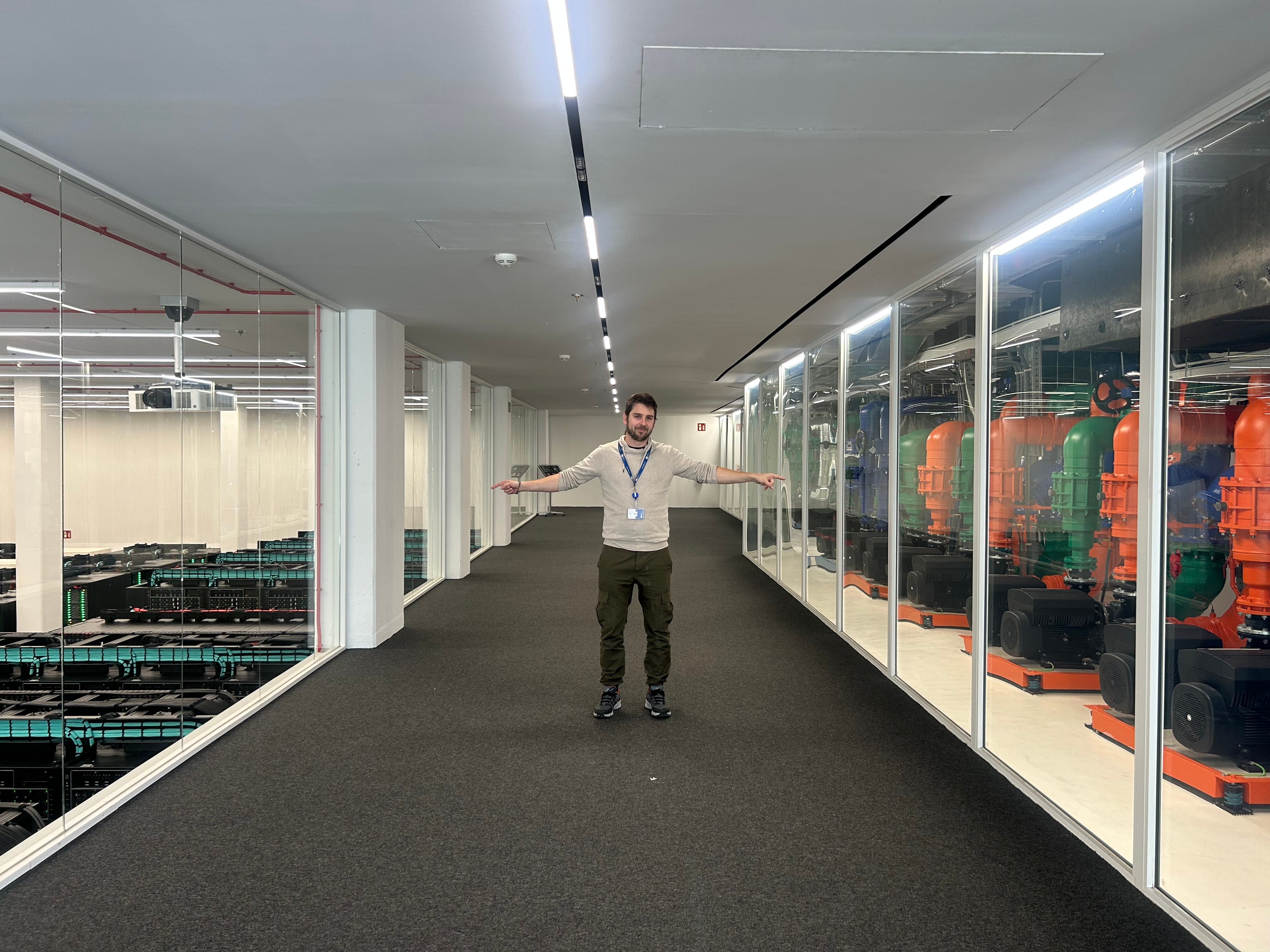
I also had the chance to meet Joan Giner-Miguélez, a former Member of the Catalan Parliament who was elected at just 26 years old and served from 2015 to 2018, where he acted as the Science and Technology Committee’s spokesman. Since leaving office, he has earned a Ph.D. in data sharing practices for a responsive AI and now works at the Barcelona Supercomputing Center, focusing on technology and AI.
Our conversation touched on Parlament Obert, an initiative he helped create to enhance transparency and civic participation in legislative processes. We also discussed the evolving role of AI in legislatures — a topic of growing interest in the Catalan Parliament, as Clara Marsan Raventós, secretary of CAPCIT, the parliament’s advisory council on science and technology, shared with me.
Here are some key takeaways from my conversation with Miguélez. Coming up in March: insights from my visit to the German Bundestag — stay tuned!
Beatriz Rey, Ph.D.
Parlament Obert
When Miguélez entered the Catalan Parliament in 2015, he faced an unexpected challenge: despite his deep interest in politics, he lacked knowledge of parliamentary politics. “I didn’t even know the number of government departments,” he recalls. His colleagues, also from smaller, non-traditional parties, found themselves in a similar situation. “If you look at our activity, we lost almost all of our initiatives in the first year-and-a-half because of lack of knowledge,” he said.
Without staff or institutional support to help them understand policy issues, they struggled to make an impact. Recognizing this gap, Miguélez launched Parlament Obert, an initiative designed to engage people in the legislative process while simultaneously building an external network of policy expertise. The idea was simple: structured meetings, modeled after parliamentary committee sessions, where interested constituents could teach about policy issues and contribute to discussions. The goal wasn’t to bring in unions or organized groups, but rather to cultivate a network of informed people who could serve as policy experts.
“We used party mailing lists for every town. Whenever a parliamentary committee was about to hold a session, we would send out an email invitation. Interested citizens could sign up, provide their credentials, and gain access to the session at parliament. The first day, many people attended just to see the parliament. But by the second day, only those truly engaged in policy discussions remained,” he explained. The initiative had tangible results. “For example, university economists found a small but significant error in the budget. By correcting it, we were able to reallocate €6 million to universities,” he said.
The initiative lasted for a year, serving as a crucial stopgap until the party could afford in-house experts. Parlament Obert demonstrates how civic engagement could be leveraged as a strategic solution for under-resourced political groups.
AI in Parliaments
Miguélez is currently researching applications of AI to public administration data. One of his team’s key projects focuses on integrating data from various Catalan government agencies to identify citizens at risk of extreme poverty. “AI is very good at learning patterns from data,” he explains. “For instance, if we take social security data and health records, we can manually cross-reference them to identify people who might be at risk. AI does this same task much faster and at scale, creating predictive models to detect social vulnerabilities.” The idea is that AI could help governments take proactive measures — offering financial aid or social services before a situation worsens.
However, Miguélez is also deeply concerned about the risks. “What happens if AI gets it wrong? If it hallucinates? These decisions affect real people, especially the most vulnerable. Right now, we are in the early stages of testing AI for these applications, trying to understand where it fails and what the risks are. But the truth is, no one fully knows the consequences yet.”
Beyond social policy, he highlights another challenge: using AI to track legislative changes. His team is developing a model to reconstruct the lineage of laws — how drafts evolve through amendments before final approval. “We are building AI to map these transactions, which is useful for analysis. But imagine if AI were used to generate these transactions in real time, proposing amendments or even entire legislative drafts. Every word in a law carries political weight; the meaning of a single term can influence future legislation. AI cannot make those decisions for us.”
For Miguélez, the biggest problem isn’t just AI’s potential mistakes — it’s the accelerating pace of change. “Before regulation comes into play, we need to understand the boundaries and risks of current AI models. But how do we do that when AI changes every six months? There’s a gap, and it’s growing.” The challenge for policymakers is not just to regulate AI, but to keep up with a technology that evolves faster than our ability to assess its impact. Addressing this pacing problem—the widening gap between technological advancements and the capacity of legislative institutions to respond—is at the core of our work at POPVOX Foundation, where we focus on helping parliaments navigate these rapid changes and develop informed, adaptive approaches to governance.
 | A guest post by
|